

The building, originally a residential house dating back to 1940 (1319 in the Iranian calendar), was leased in late 2023 (1402) for a period of five years.
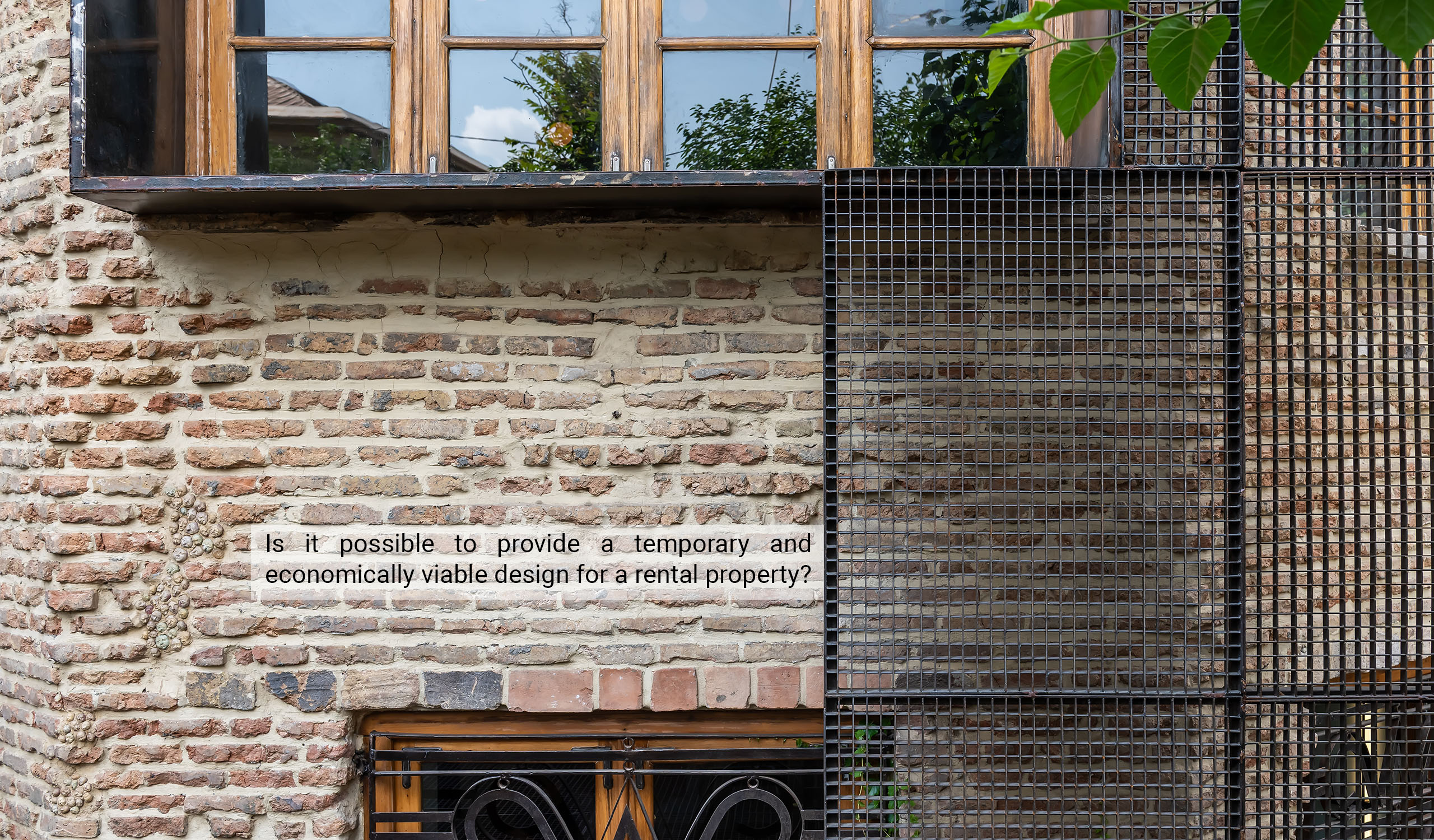
The short duration of use introduced challenges related to construction speed, cost efficiency, and the temporary nature of the structure, adding layers of complexity to the renovation project.
Extensive intervention would have increased both the design and construction time and costs. However, the temporary nature of the project was seen as an opportunity to employ reversible materials and techniques that, while sustainable, would also serve the client’s interests.
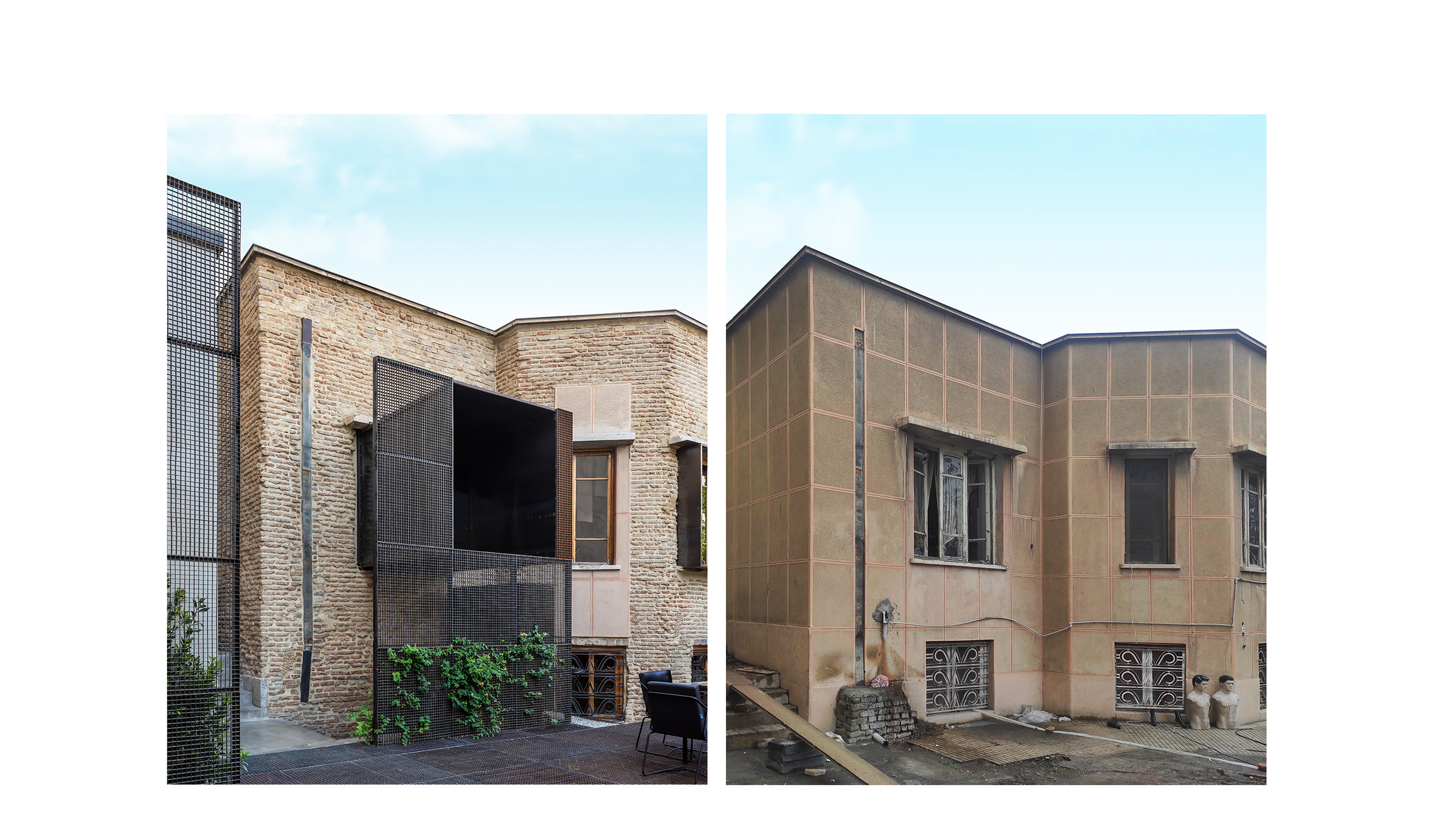
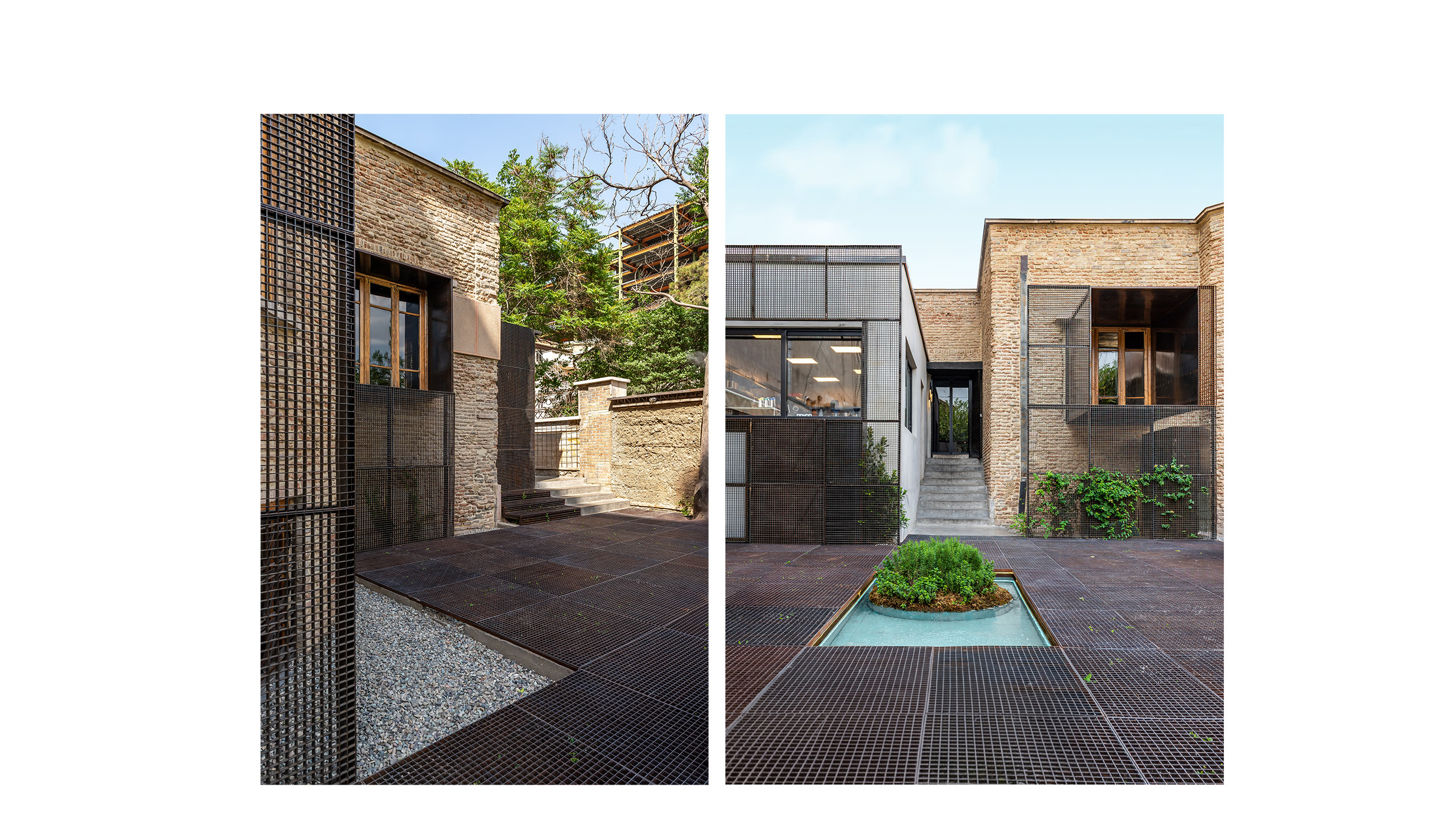
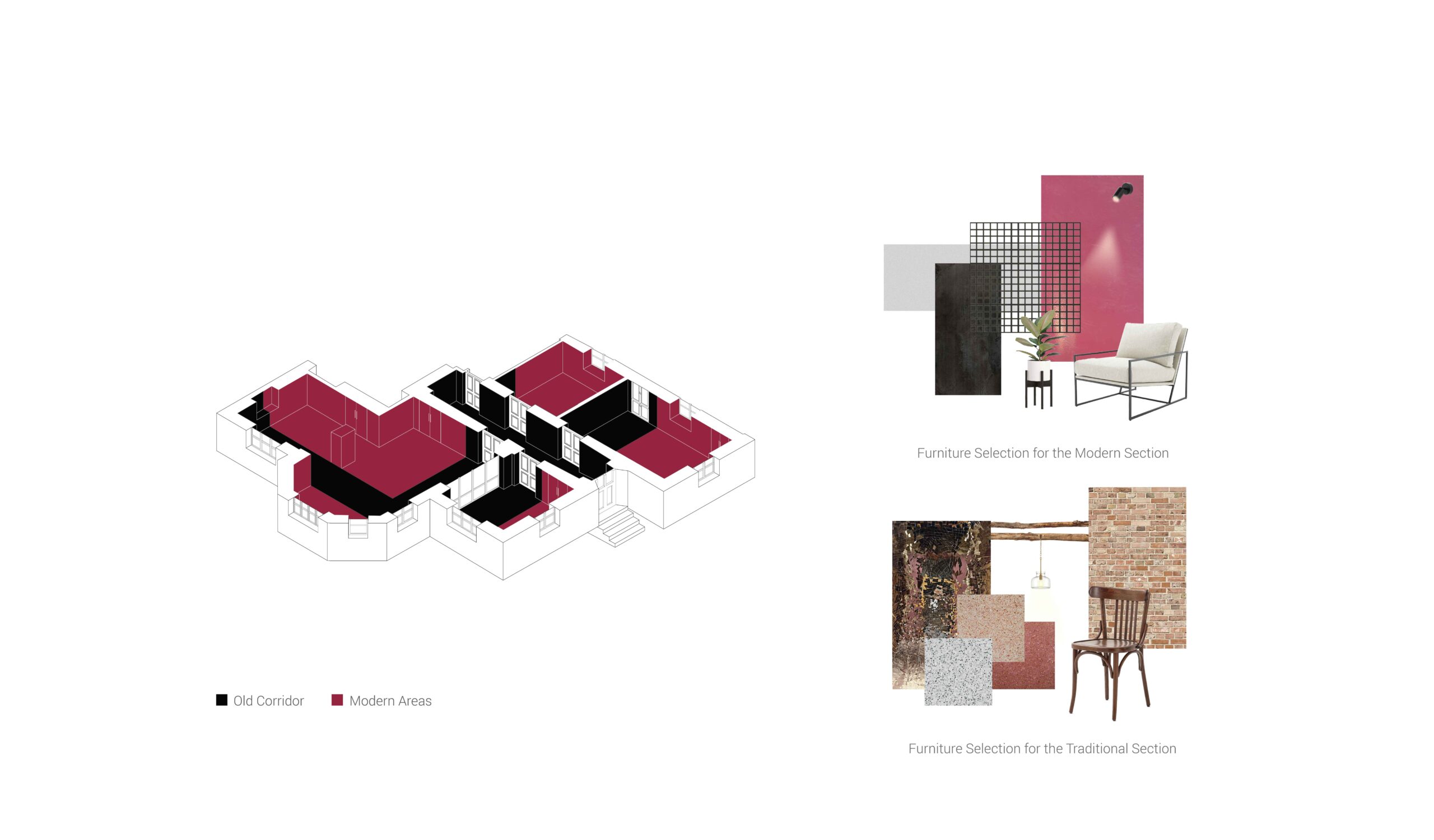
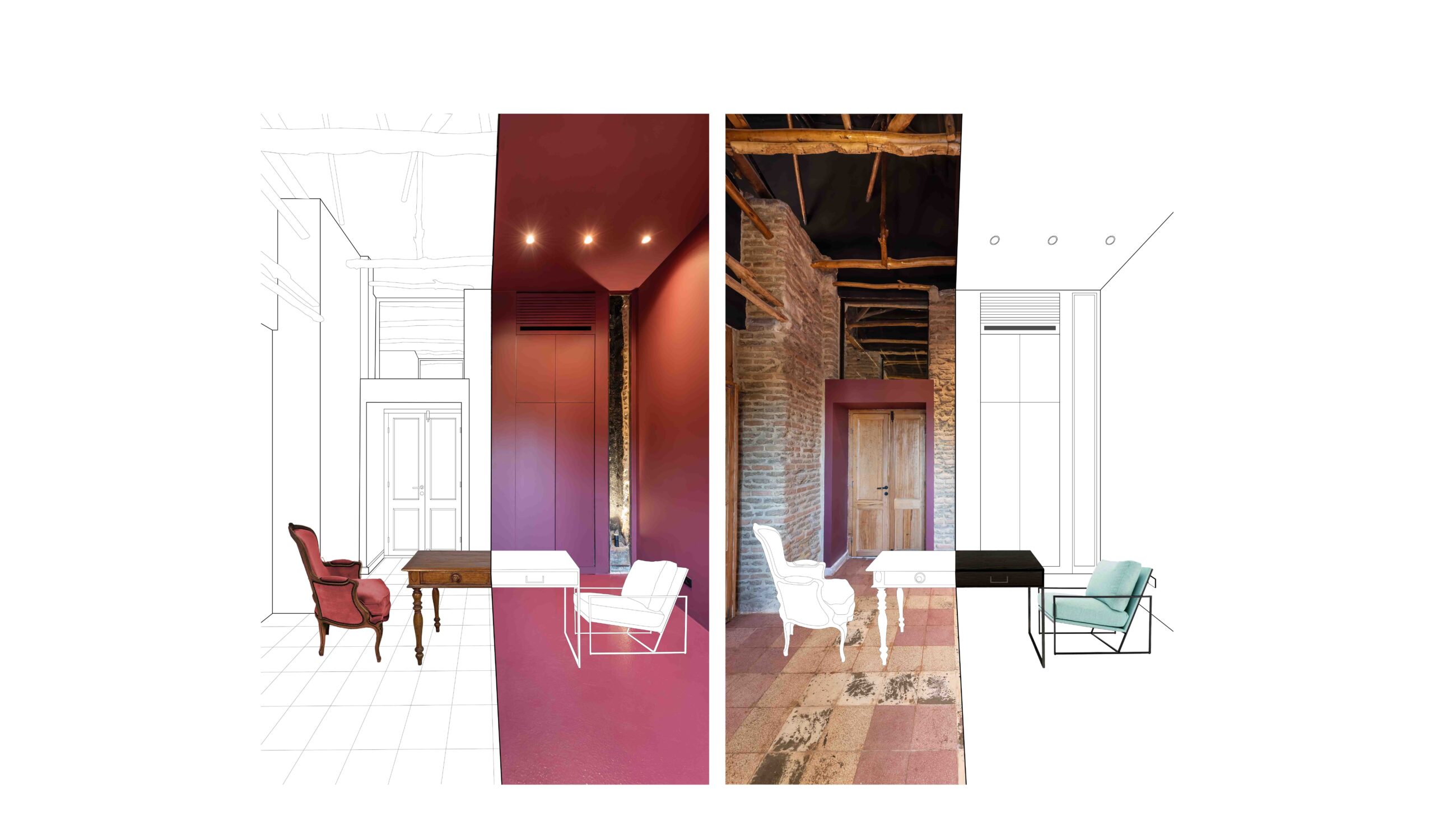
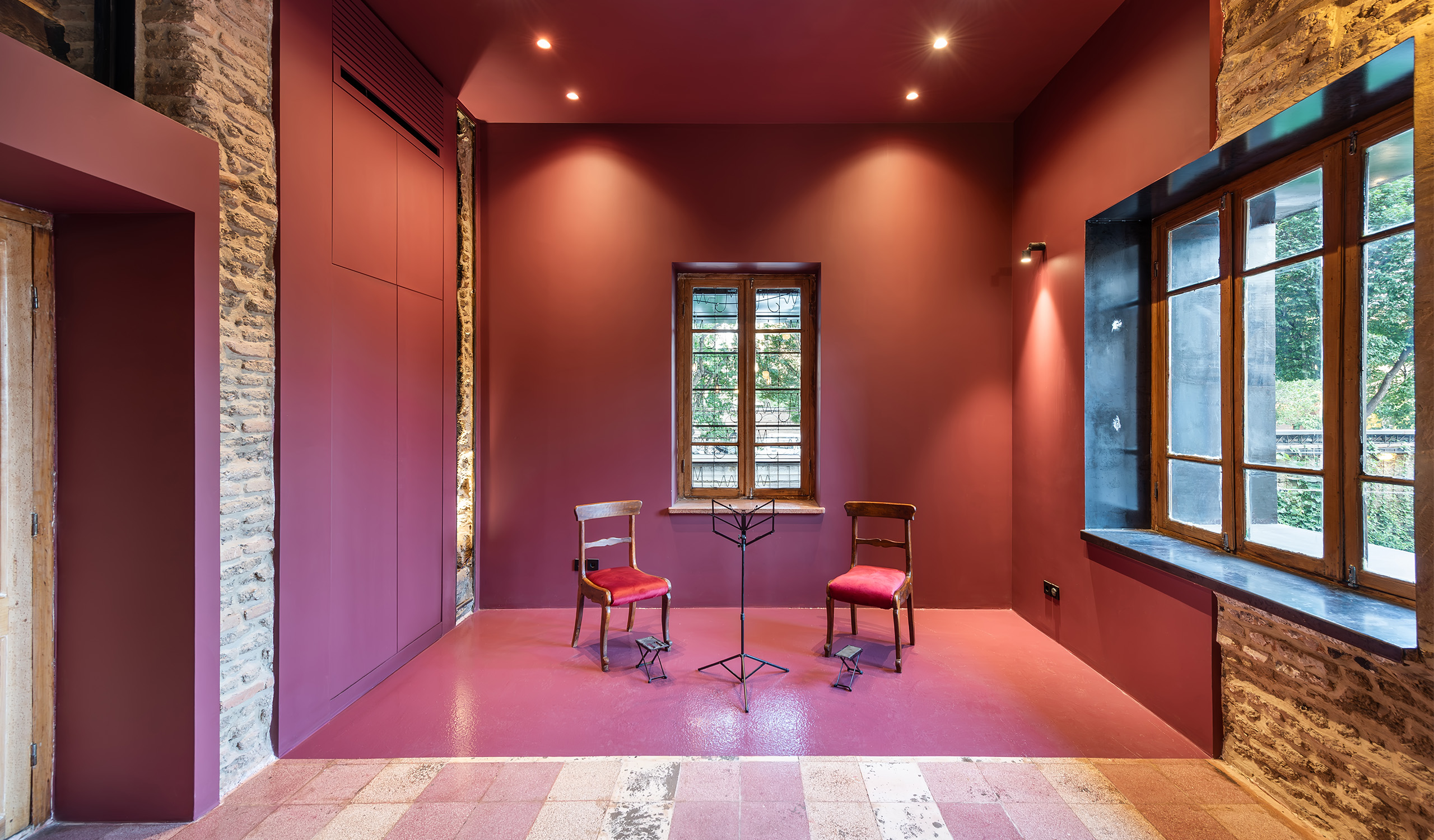
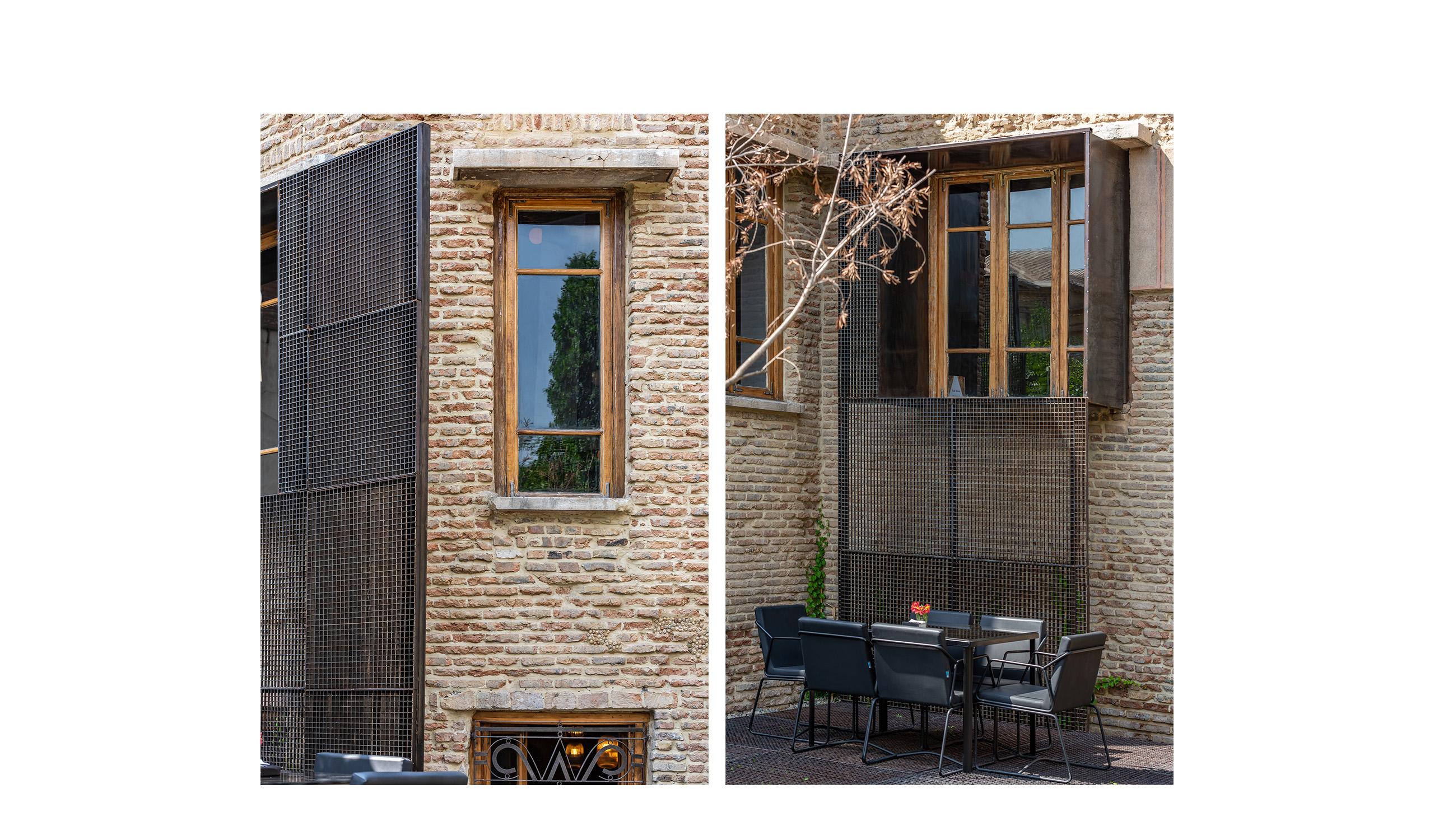
Therefore, small-scale, creative strategies and detailed design with minimal intervention were chosen as the main approach. The interventions intentionally contrast sharply with the existing context, making them easily distinguishable within the reading of the site.
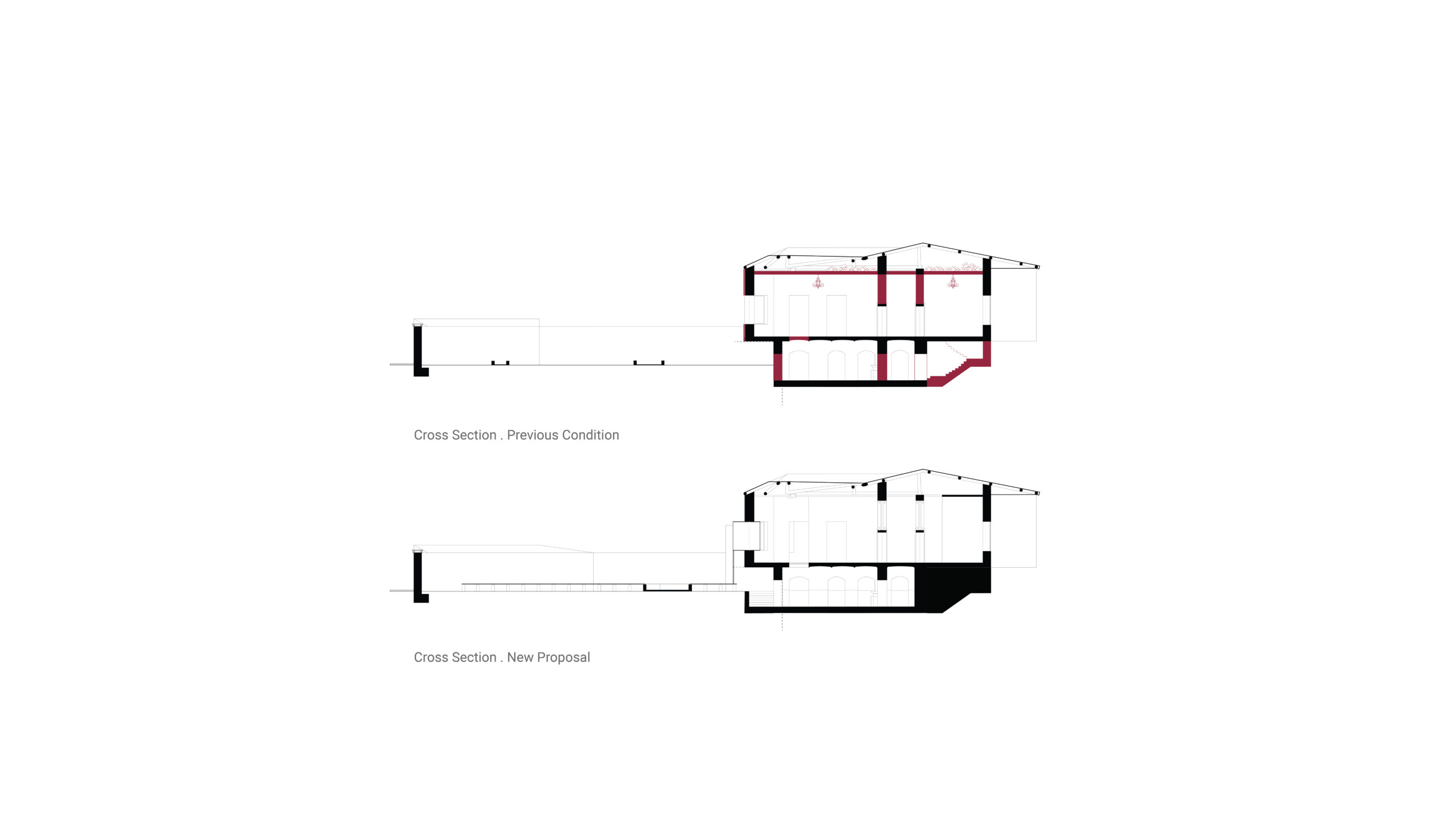
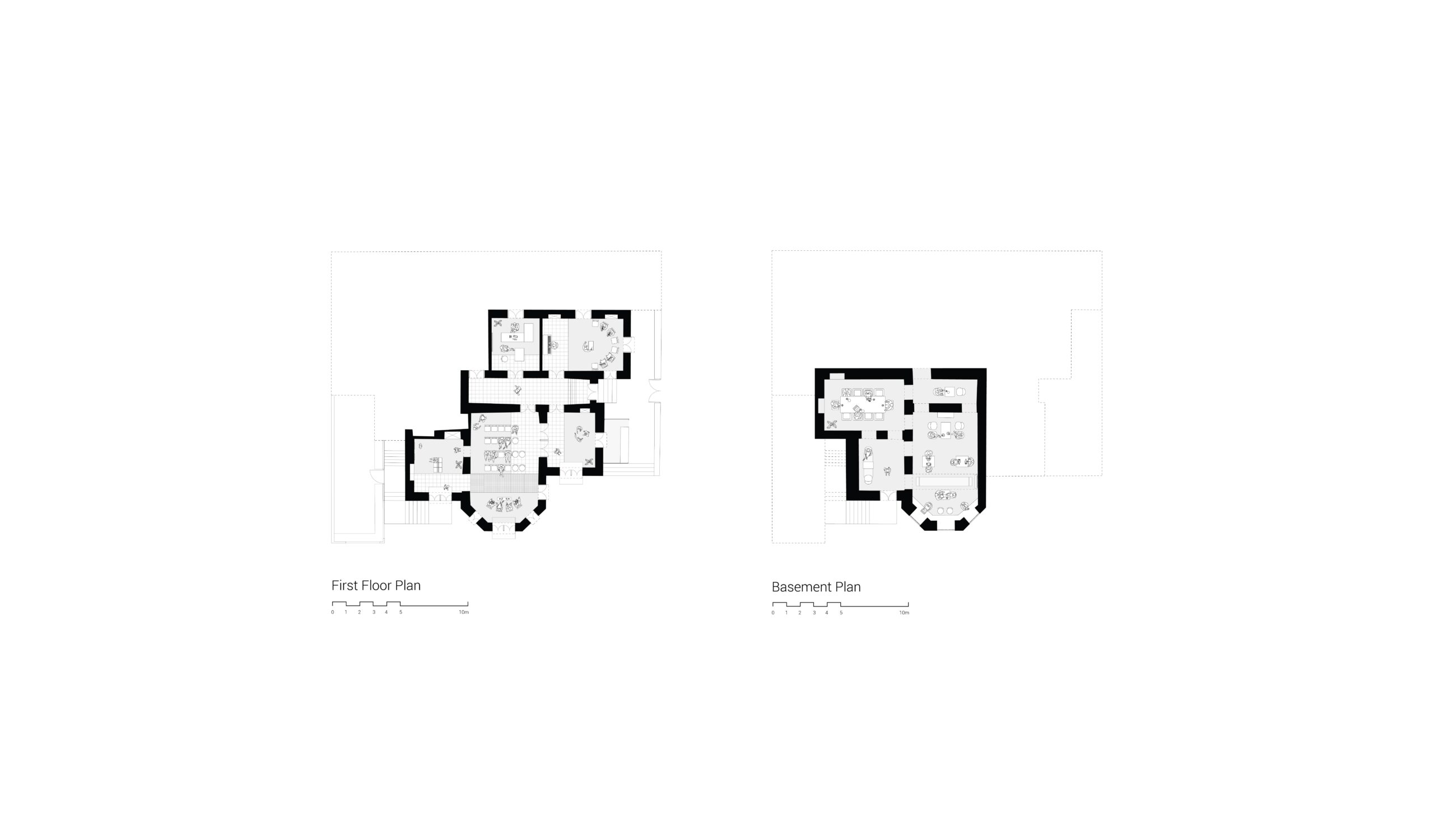
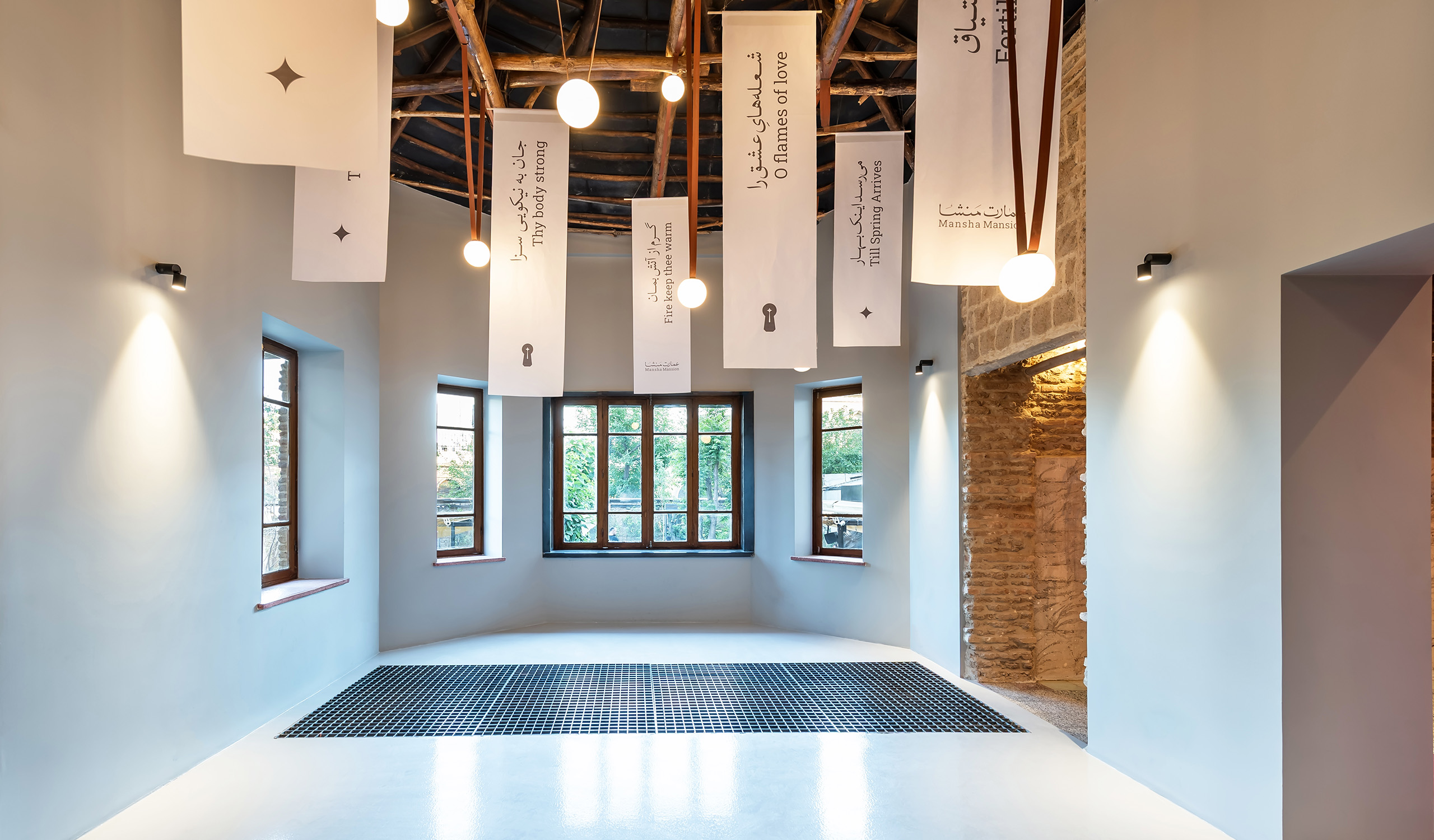
Moreover, the “subtractive” approach reducing rather than adding proved to be more cost-effective. It not only created a new spatial quality but also revealed and celebrated the building’s valuable historical layers. Exposing what once existed but had been concealed by improper past renovations thus became another key design principle. Instead of covering the site’s historical layers, the project brings them to public view.
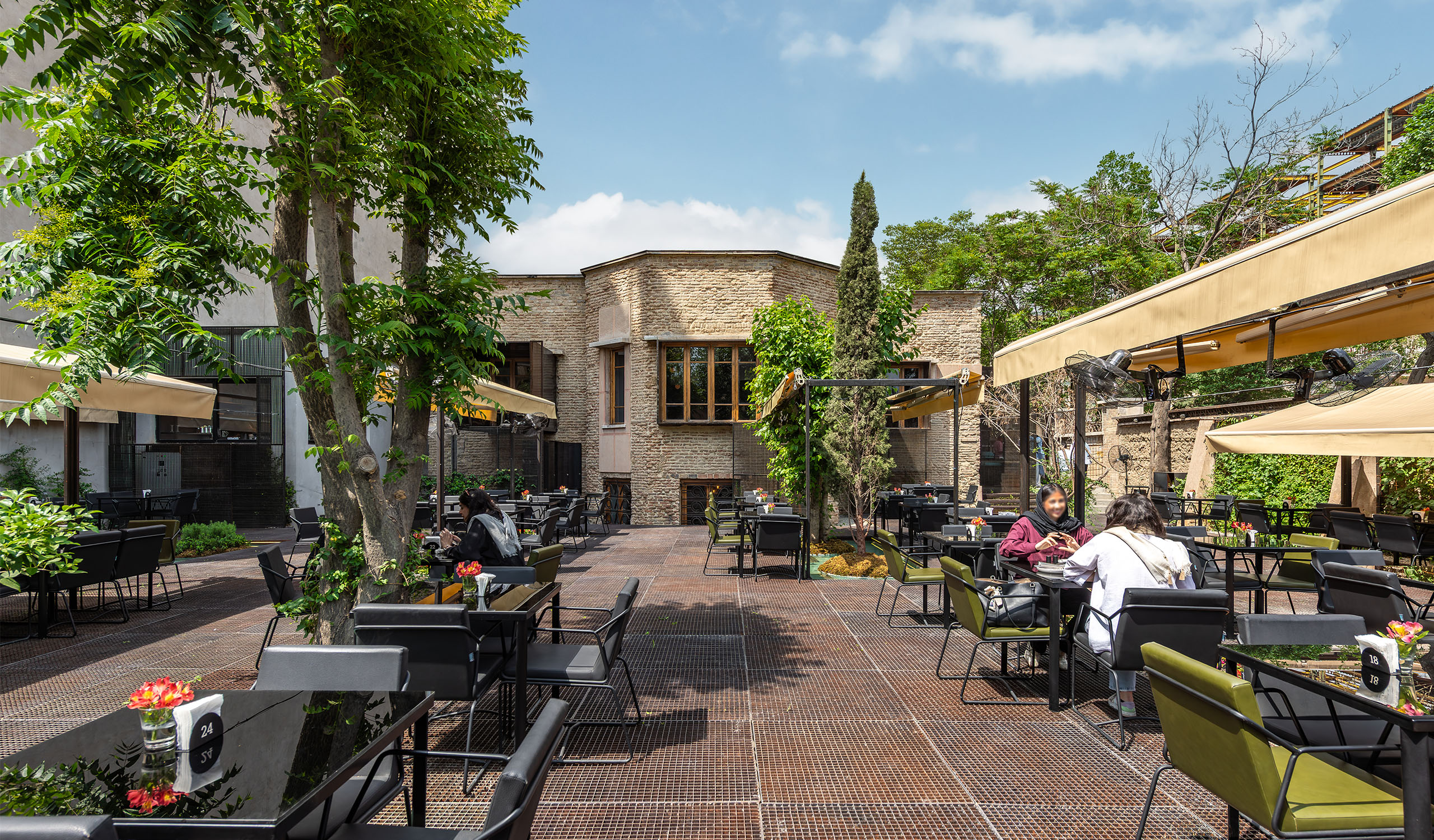
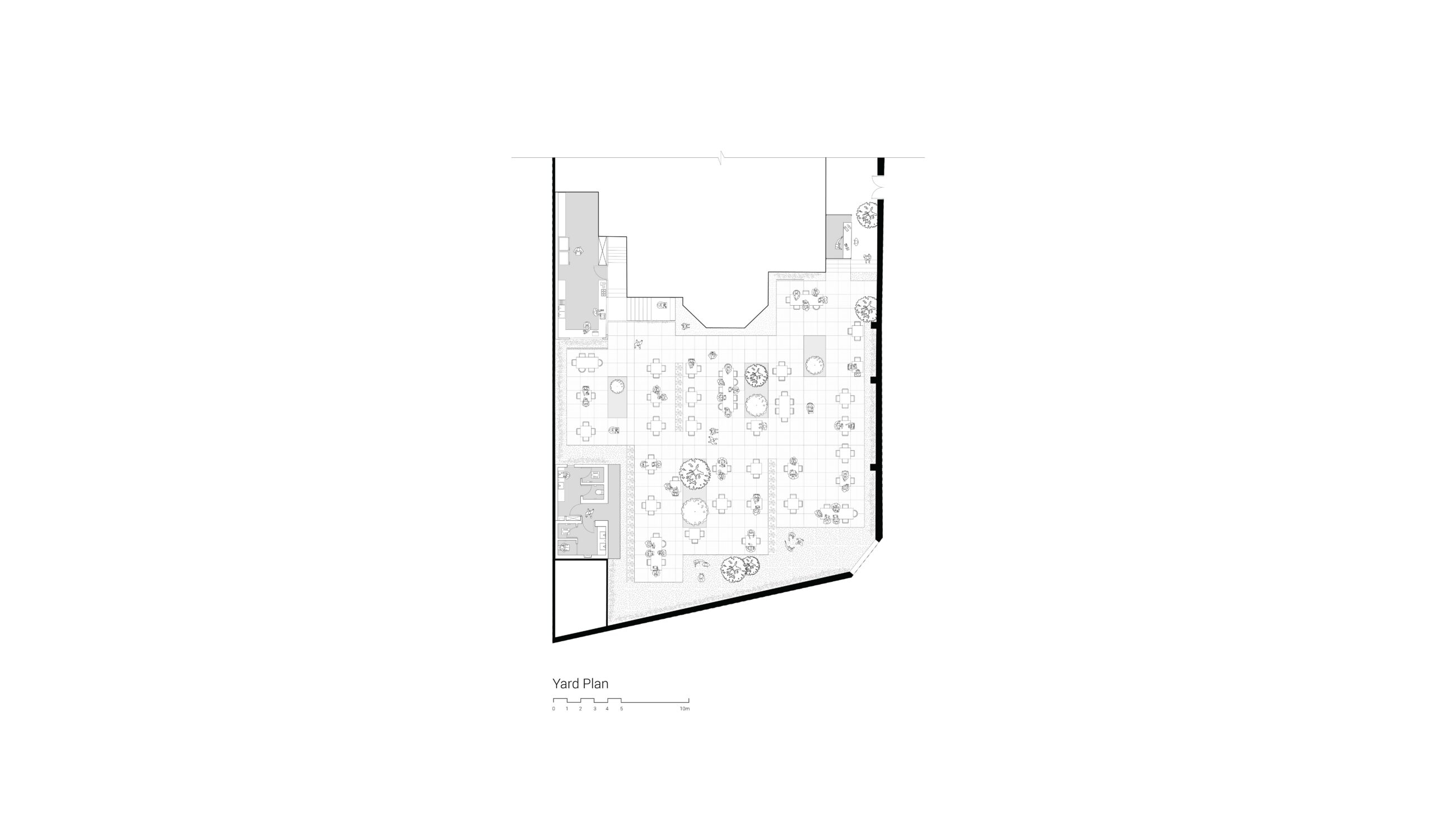
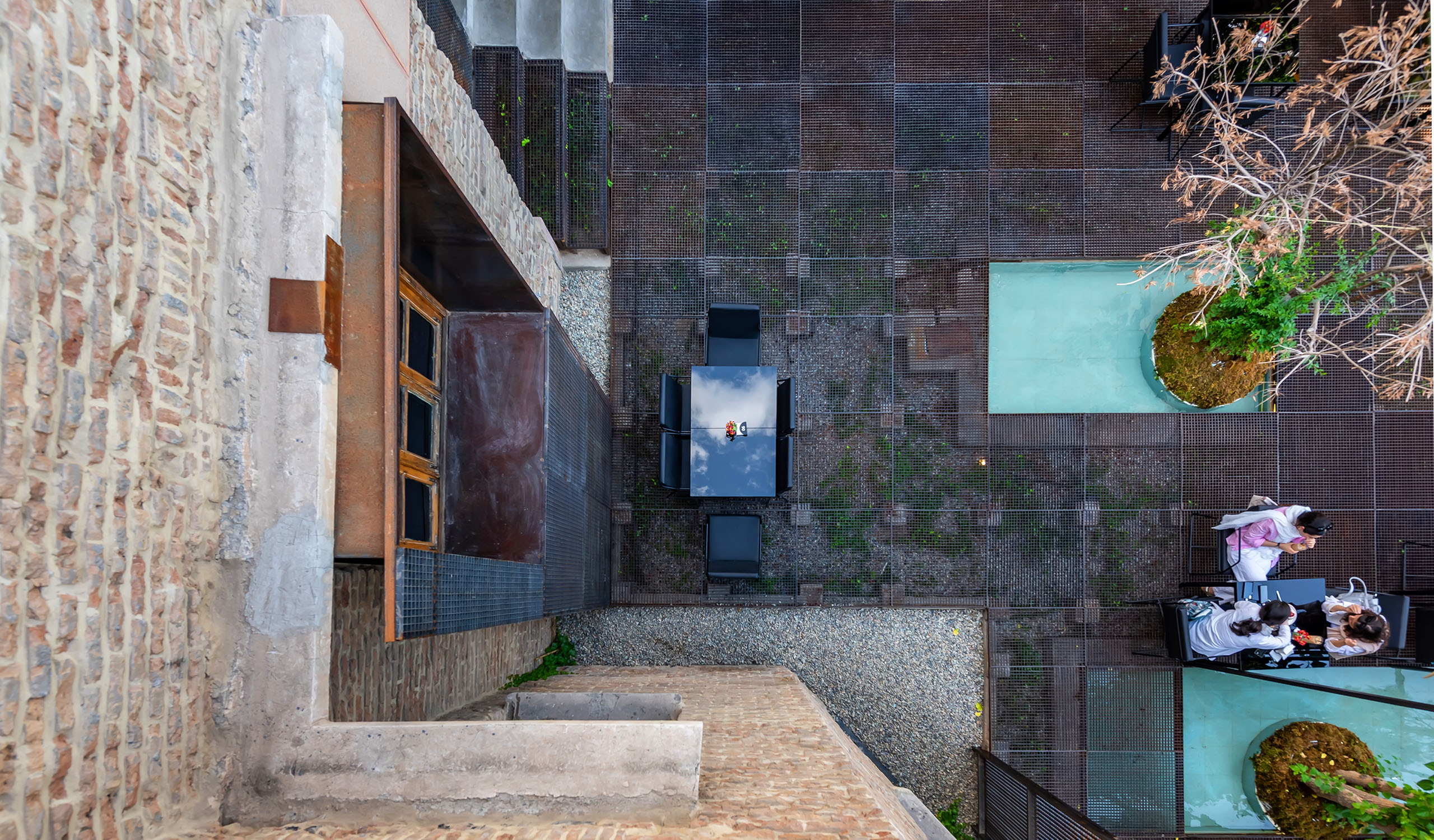
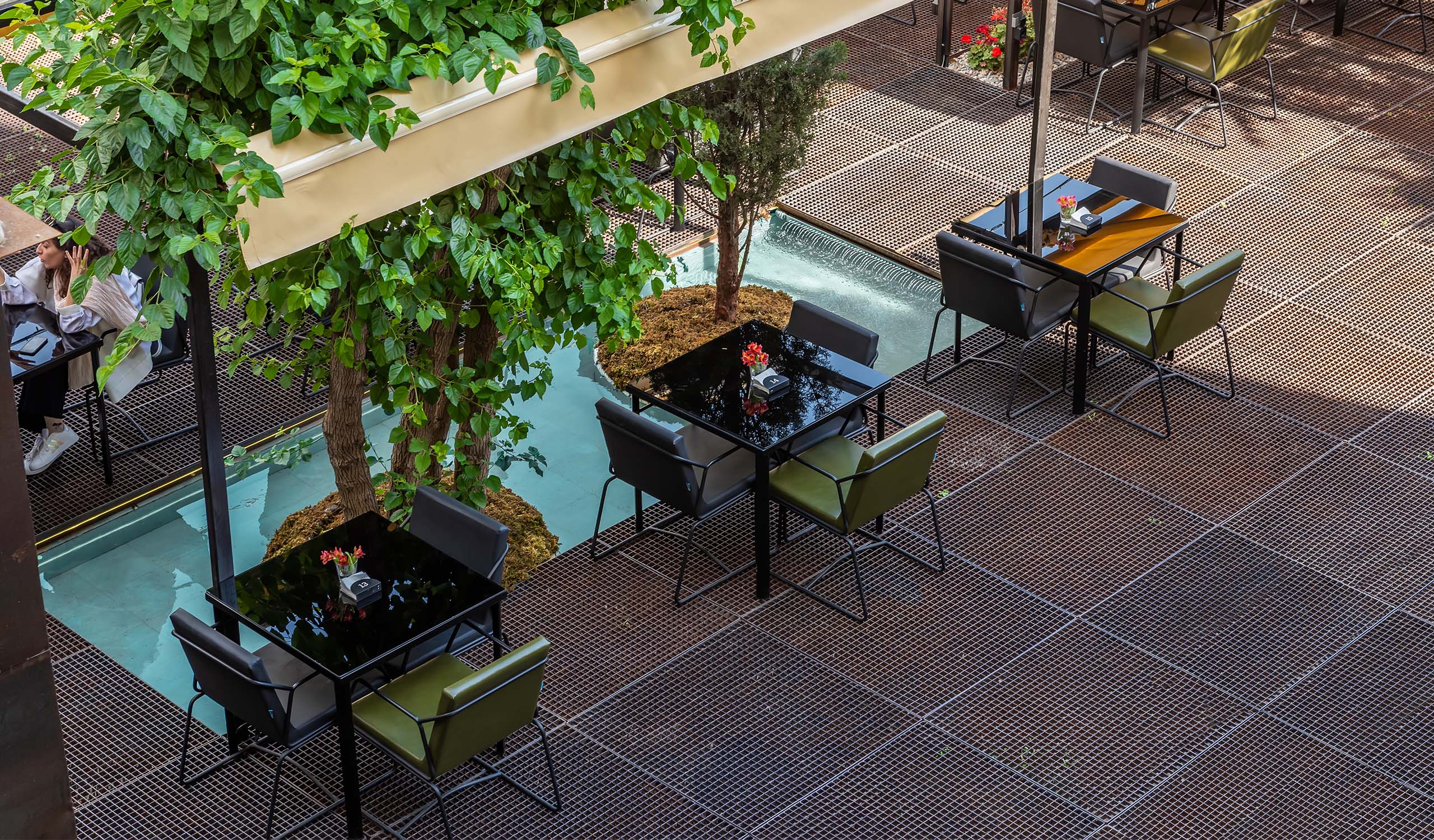
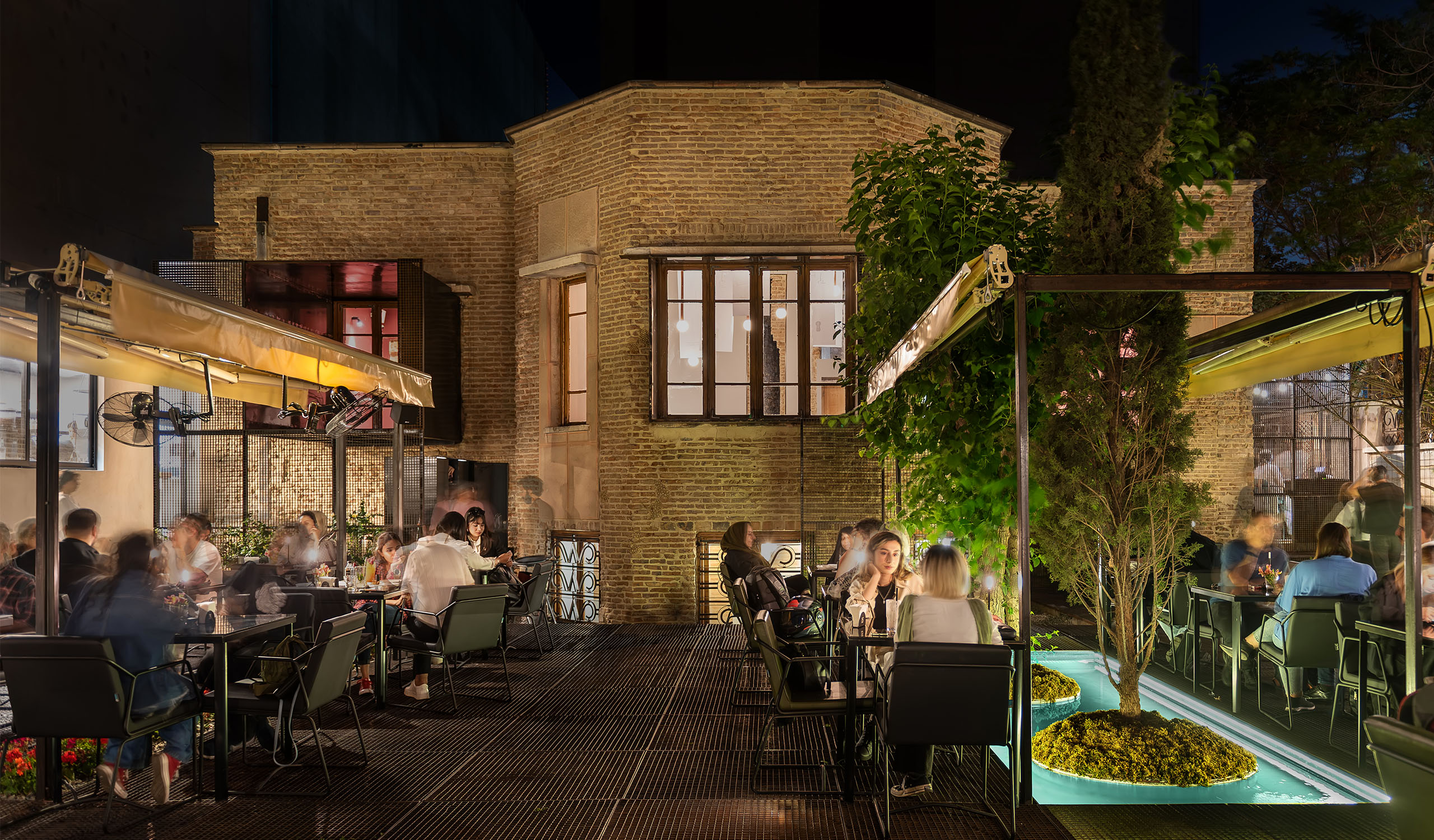
The geraniums, the pool, and the tree recall the courtyards of traditional Iranian houses. In the design of Mansha Mansion, these elements were borrowed from the past and reinterpreted in a modern structure.
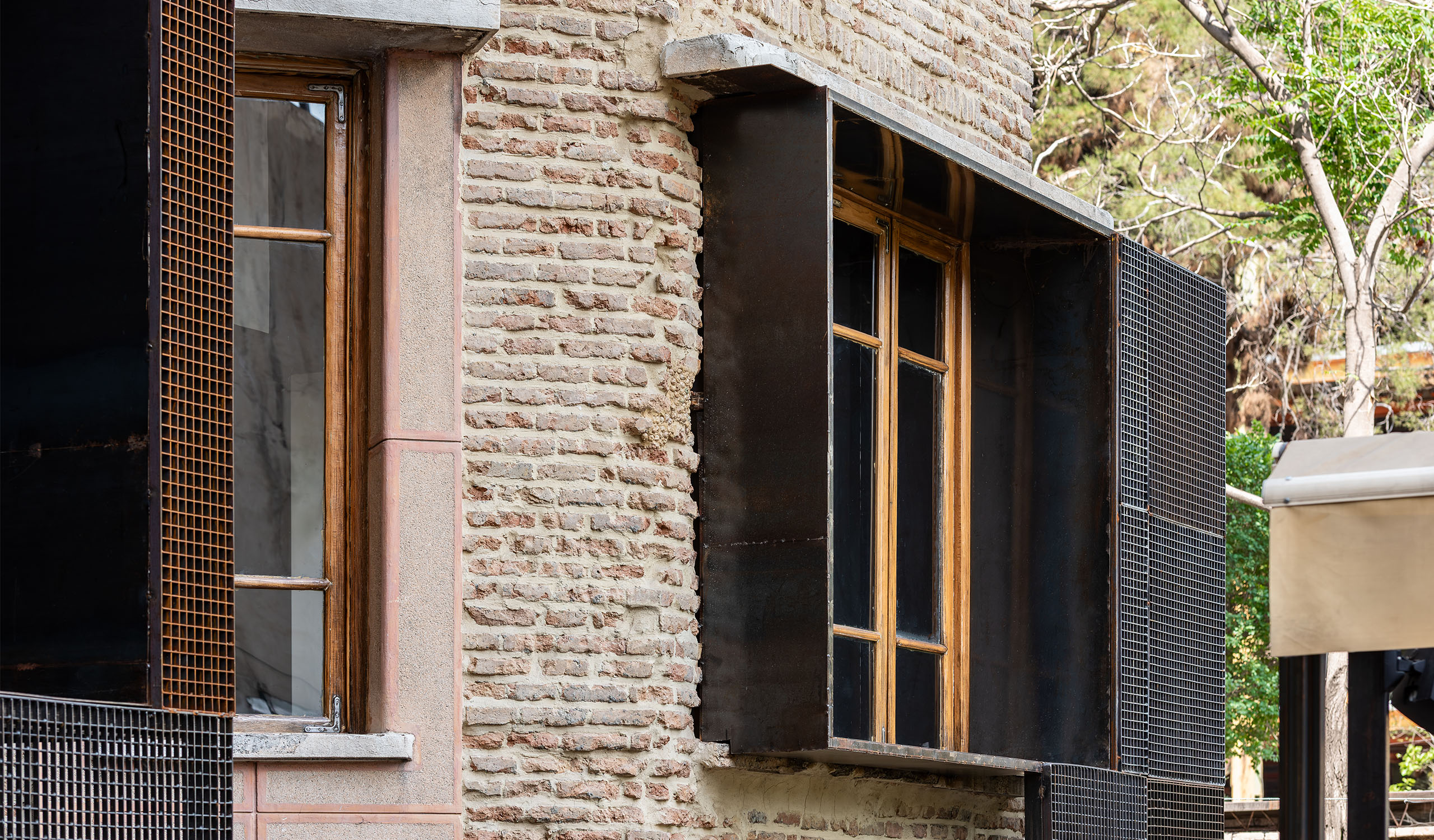
Another guiding strategy of the project was the definition of boundaries. Emphasizing the spatial separation between the new additions and the existing structure and highlighting it in the design serves as a gesture of respect toward the past and the building’s historic architecture.
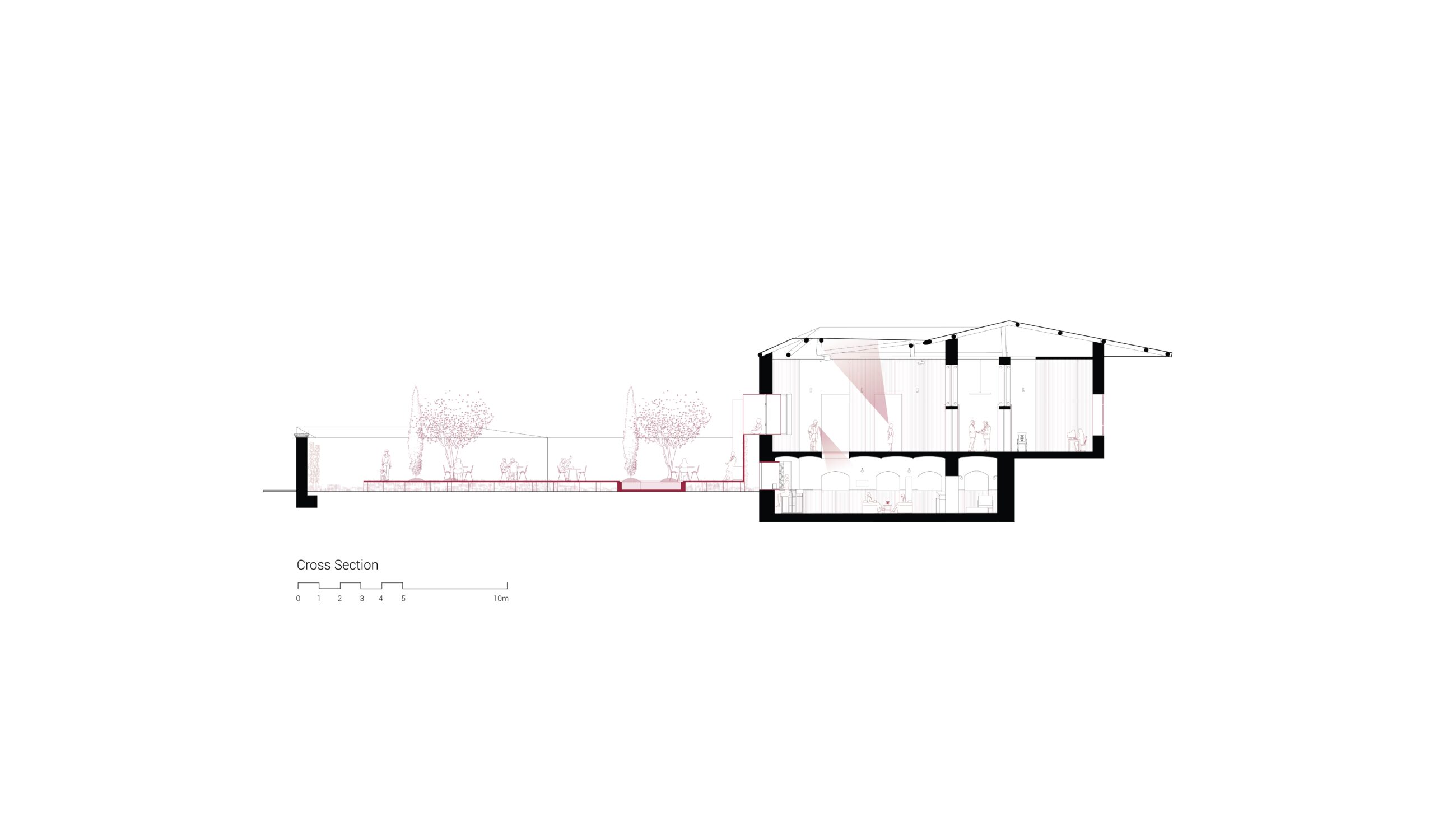
In the courtyard, a new floor surface was defined elevated above the existing ground level and detached from the courtyard walls. This added plane was not limited to the floor; the same strategy of “distance as a sign of respect” was repeated in the façade design, reinforcing the project’s conceptual coherence.
MANSHA MANSION
TYPE
Cultural
CLIENT
Mr. Kermajani & Mr. Fattahi
STATUS
Completed
LOCATION
Tehran, Iran
SITE
984 sqm
SCALE
Small
COLLABORATORS
PHOTOGRAPHY
DESIGN TEAM
CREDITS
Design by | Ashrafi & Zad Design |
CLIENT
Tohid Kermajani, Iman Fattahi
DESIGN TEAM
Principal(s): Raha Ashrafi
Project Management and Design Oversight: Nava Kholoosi
Design Lead: Parniya Mallaki
Design Team: Mohamadreza Pakdast
Design Communication: Parniya Mallaki, Shaghayegh Naji
CD Team: Parniya Mallaki, Mohamadreza Pakdast
Photography: Arash Pasha
Special thanks to:
Structure: Eng. F. Bahrami
MEP: Dr. Hashemi
Construction Administration: Vahid Vaziri