Visit this Project on the TUIC Site
The pre-modern definition of the “city” has a deep association with “consumption”, as opposed to production; specifically, when it comes to the food industry. The city, as we know it, has been recognized as a site of consumption; thus, in the same way, outside of the city, it functions as a site of production.
This division between sites of production and sites of consumption has been playing a major role in the industrialization of the food system, changes in production and consumption patterns, and notable levels of food loss and waste. In the case of Tehran, the city is also dealing with a deficiency of land for allocating to public space, resulting in various implications like social isolation.
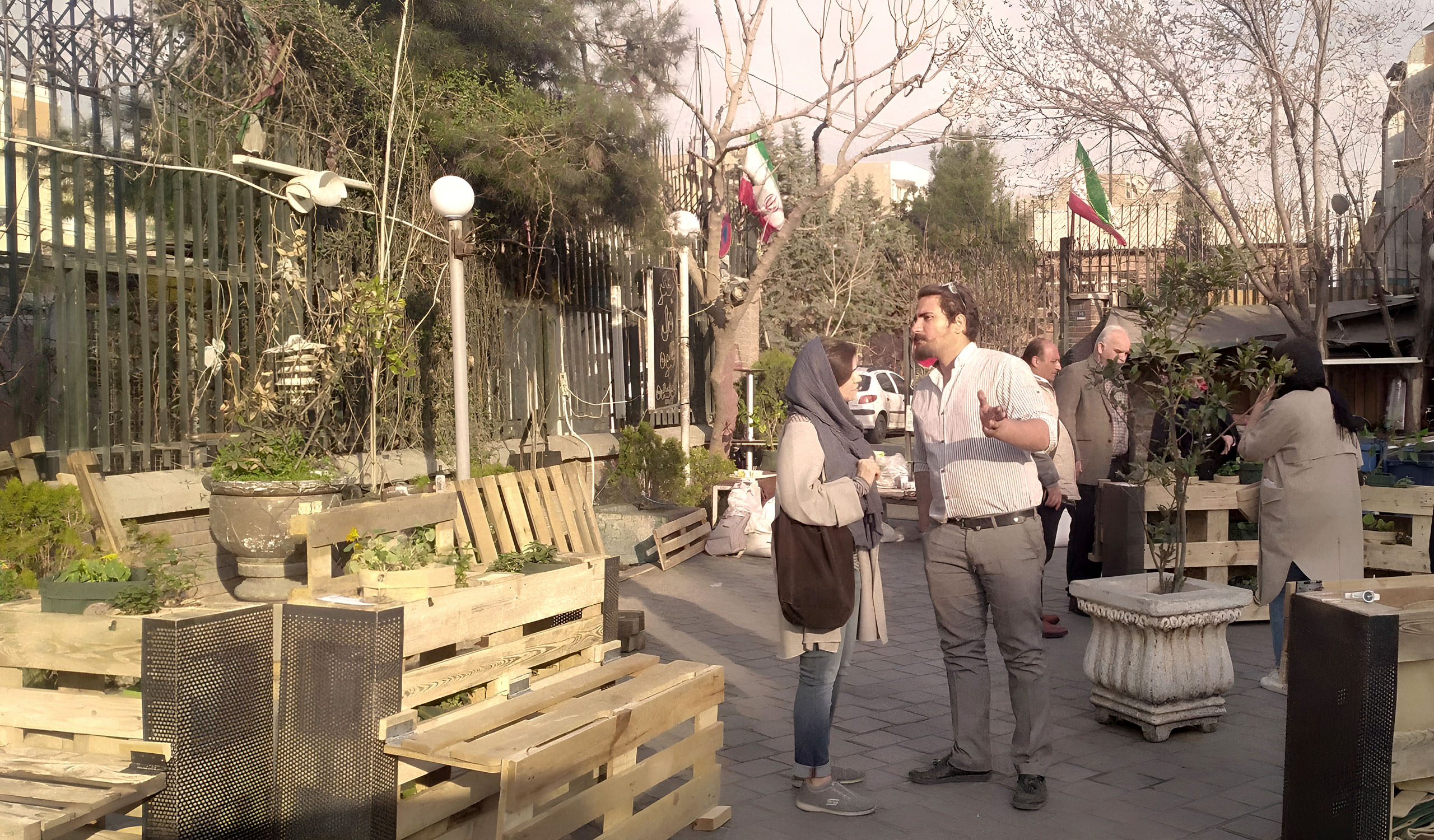
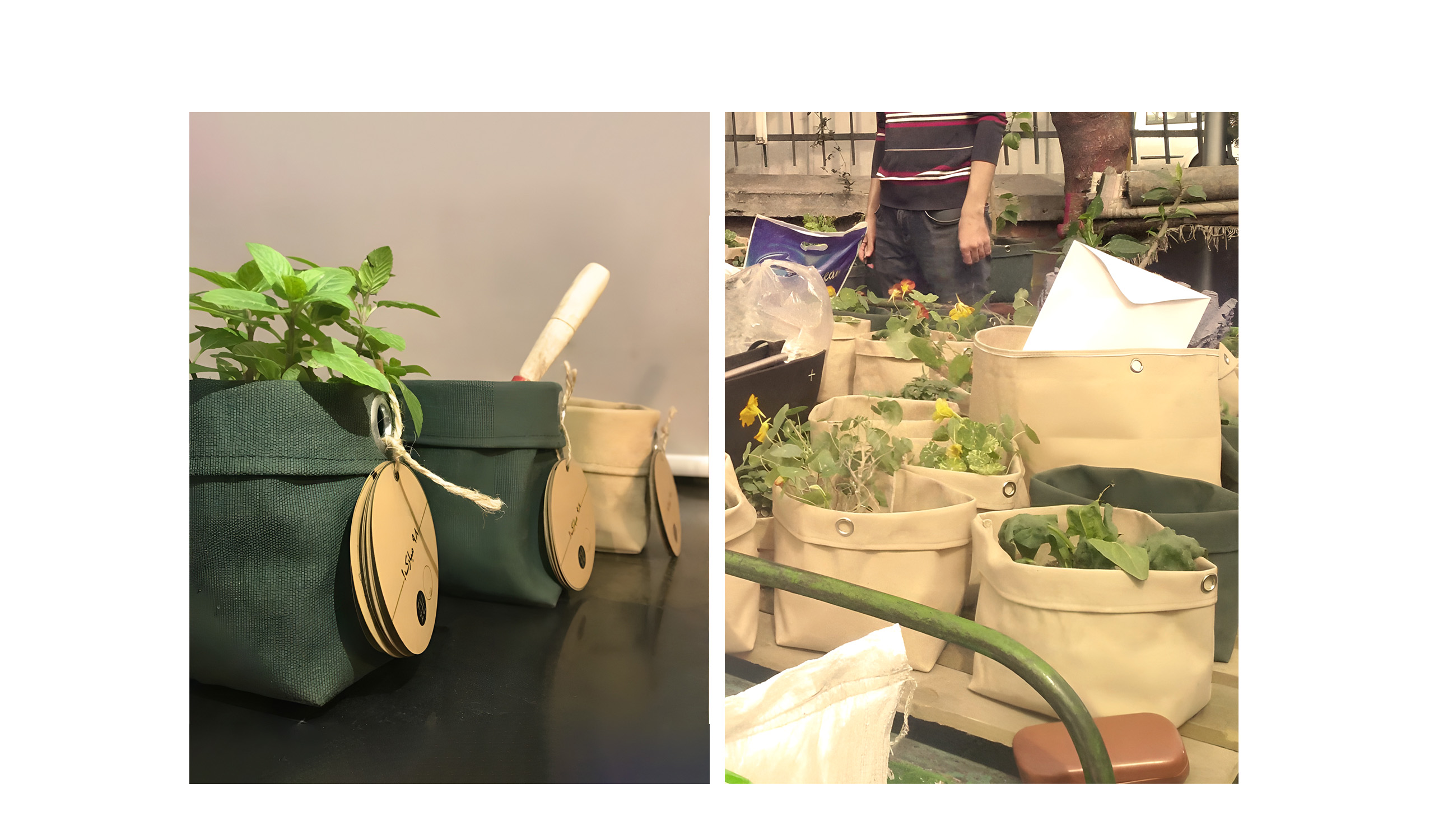
Over the course of the Urban Agriculture studio at TUIC, a group of researchers and designers attempted to examine whether small-scale urban public spaces of Tehran can fill the gap between production and consumption of plants. The outcome of the studio was the Green Leftovers project, a multifunctional urban furniture piece that can perform as a seat, a shelf to hold plants, and a place to give the user an opportunity to experience the entire process of planting a plant. The design and fabrication of the furniture were all aligned with respect to circular economy principles: reusability, affordability, and adaptability (flexibility). These pieces of furniture were made out of recycled wood pallets, the plant pots were made out of fabric (in order to keep their reusability), and the entire installation could easily be dismantled and assembled again in another public space.
The unveiling of the furniture occurred in an urban demo in a leftover space at a crowded intersection in Shariati St., one of the main streets of central Tehran in district 7. In fact, similar leftover spaces have been distributed widely throughout the city of Tehran. The Green Leftovers introduces a simple solution to transform these spaces into small-scale sites of presumption through a collaboration between the public sector, the private sector, and local participants.