What strategies allow traditional geometry to function as a generative system in contemporary public space design?
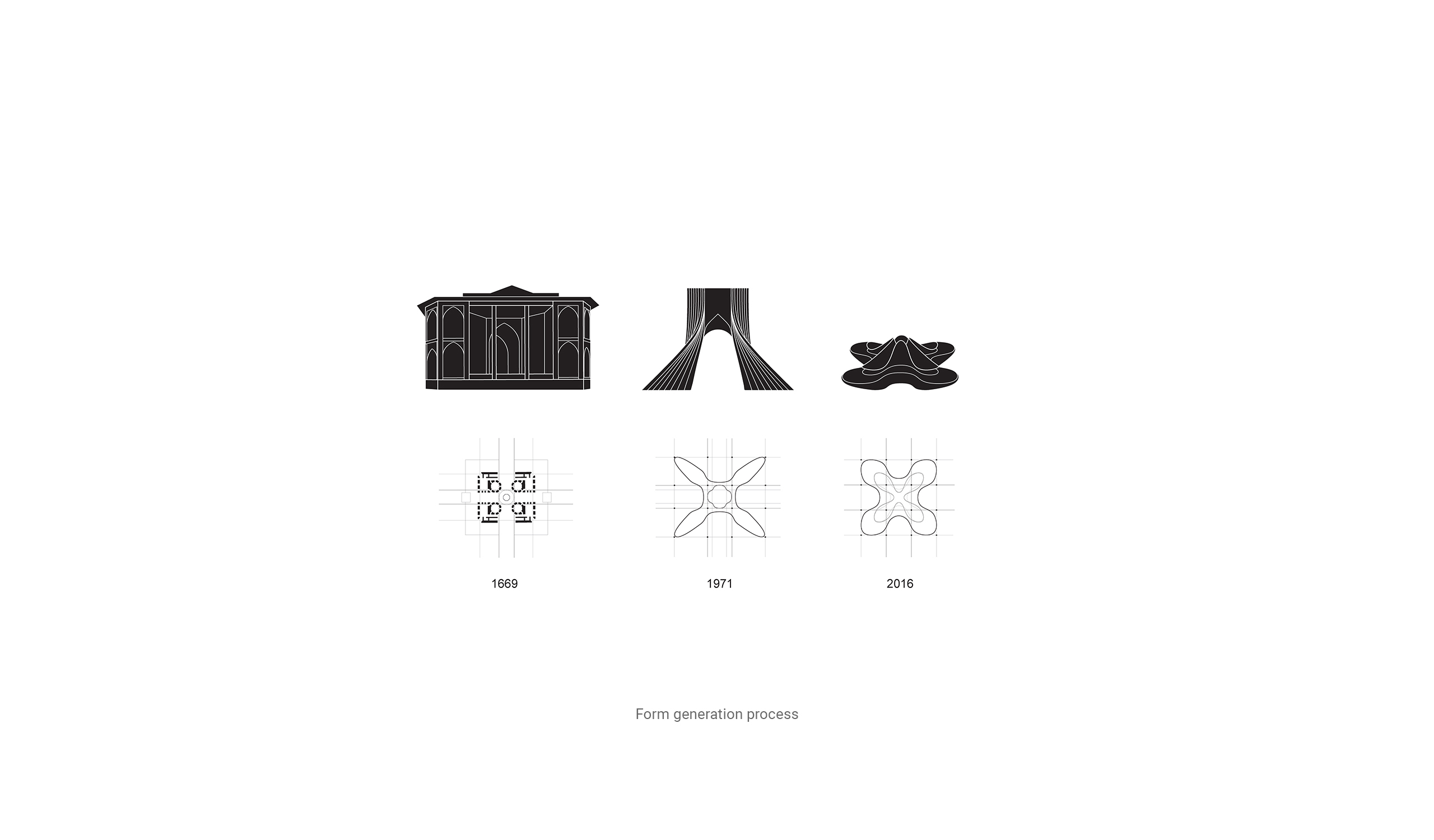
Persian architecture is heavily rooted in geometric patterns and geometric systems. Over time, iterations of geometry systems such as the Chalipa (or Persian 9-square) have grown to become an easily identifiable aesthetic of Iranian architecture and cultural identity. But beyond their cultural heritage, these geometry systems also have a uniquely adaptive vocabulary which responds to new technologies and design processes, inspiring creative re-interpretations of formal and spatial expression that reflect the collective design ethos of any given time in Iranian history.
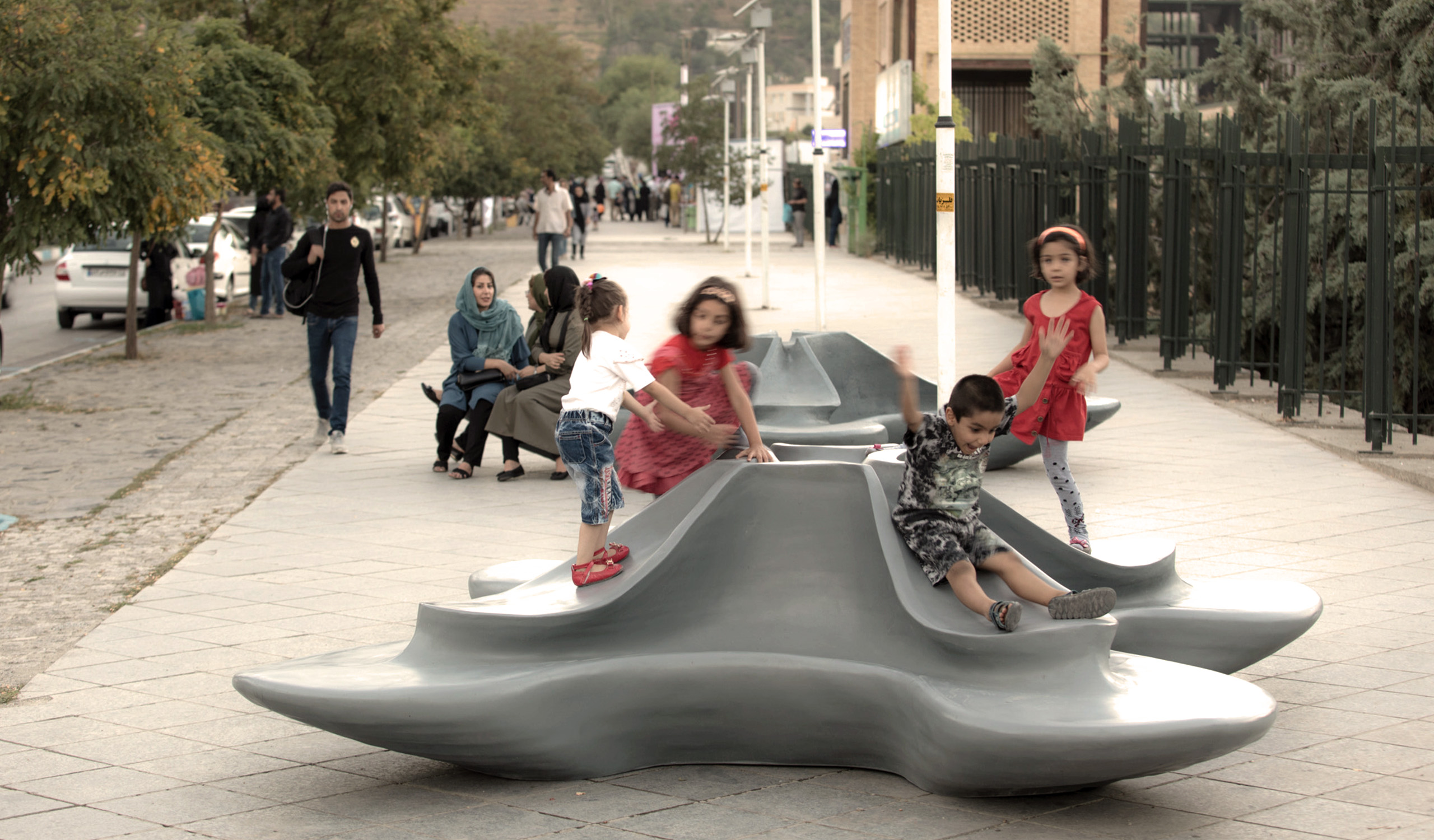
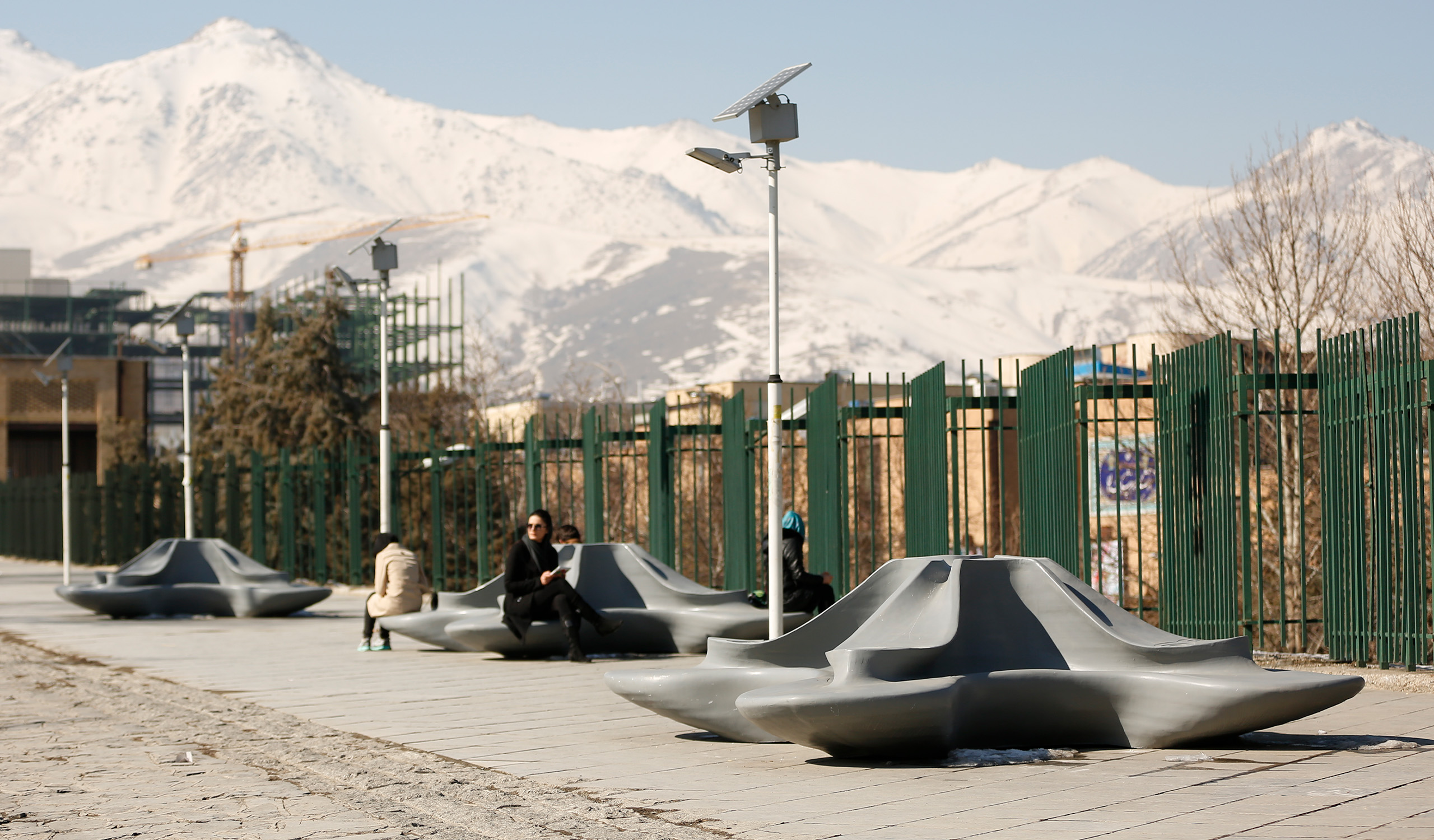
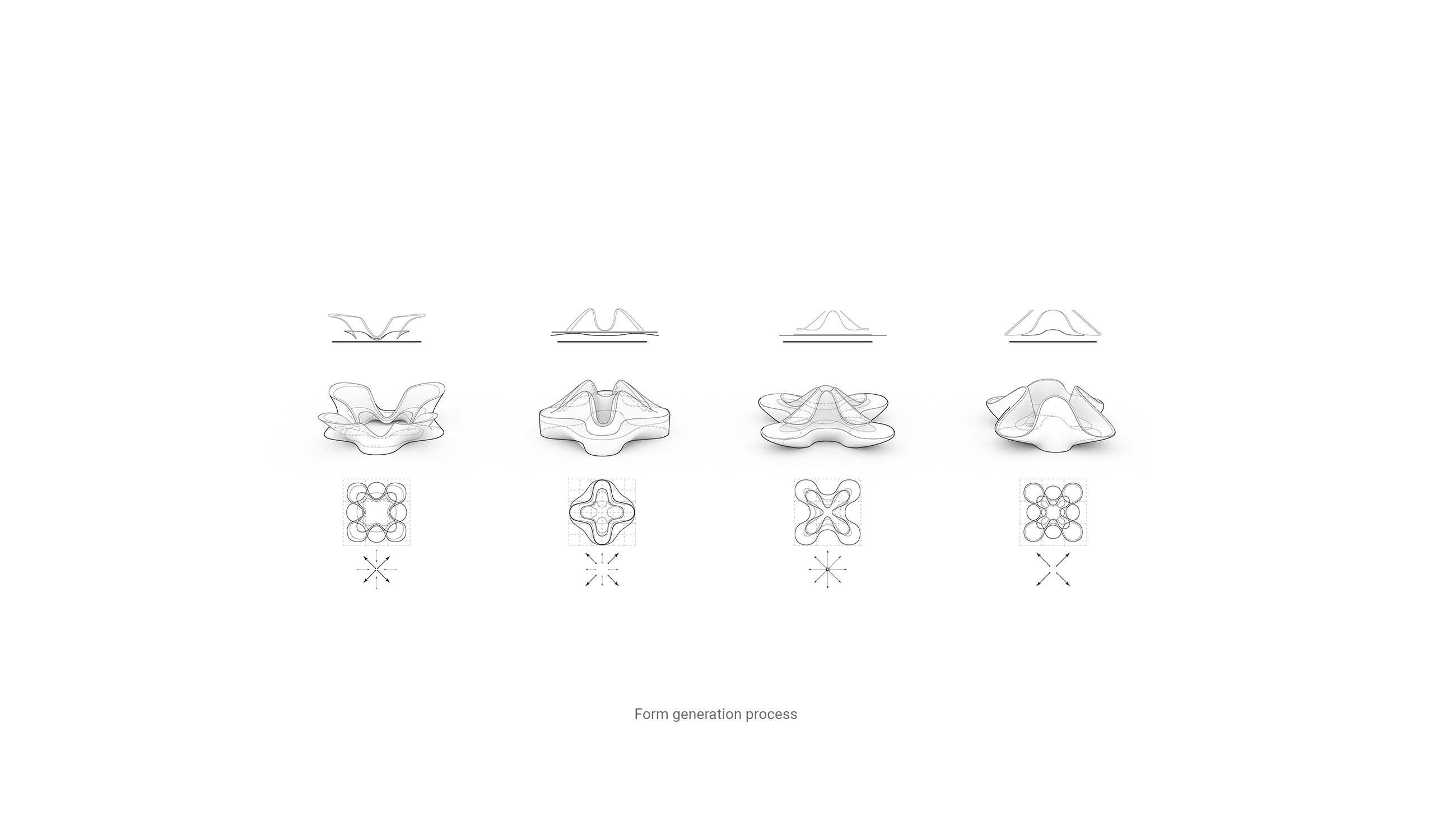
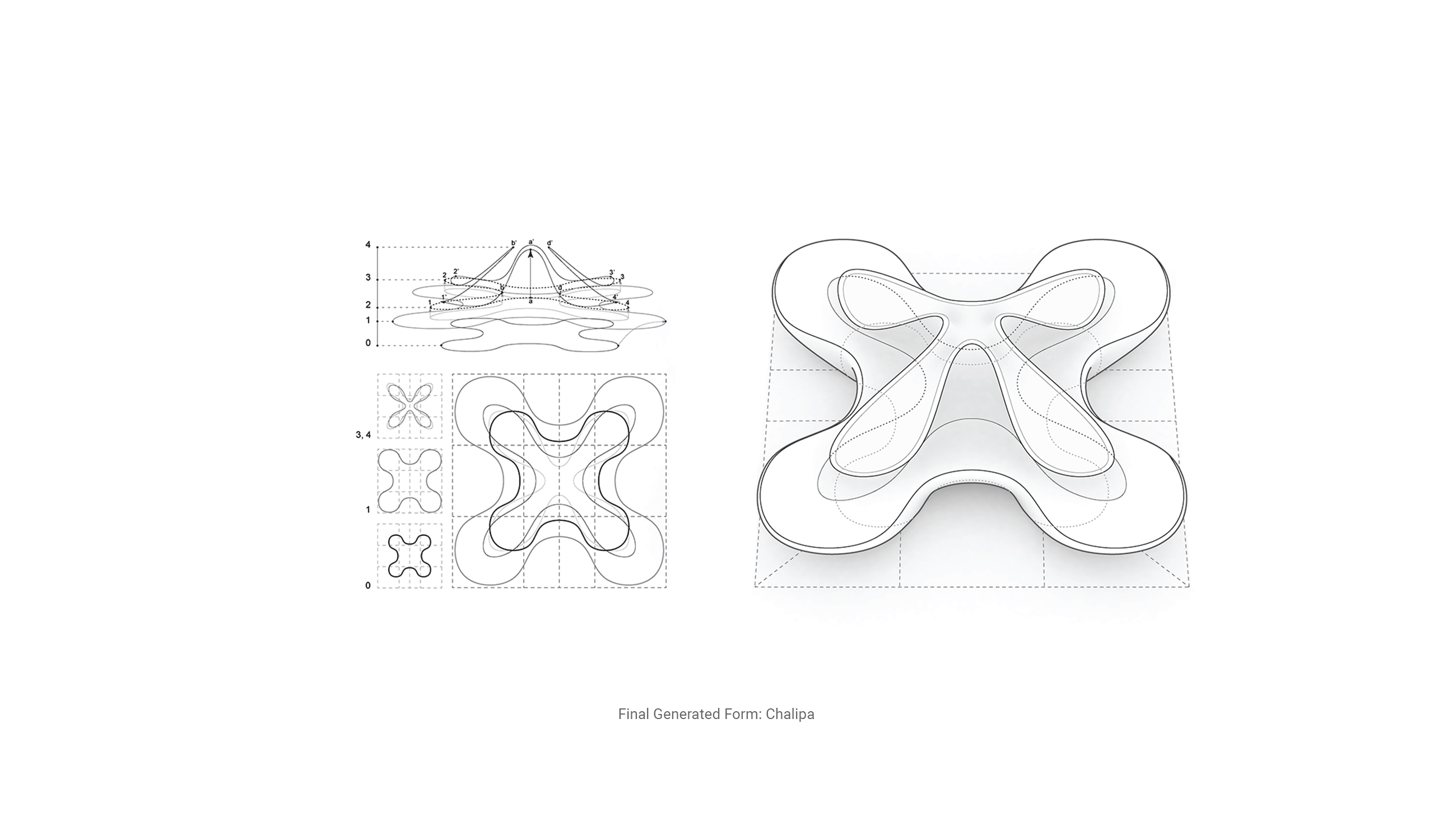
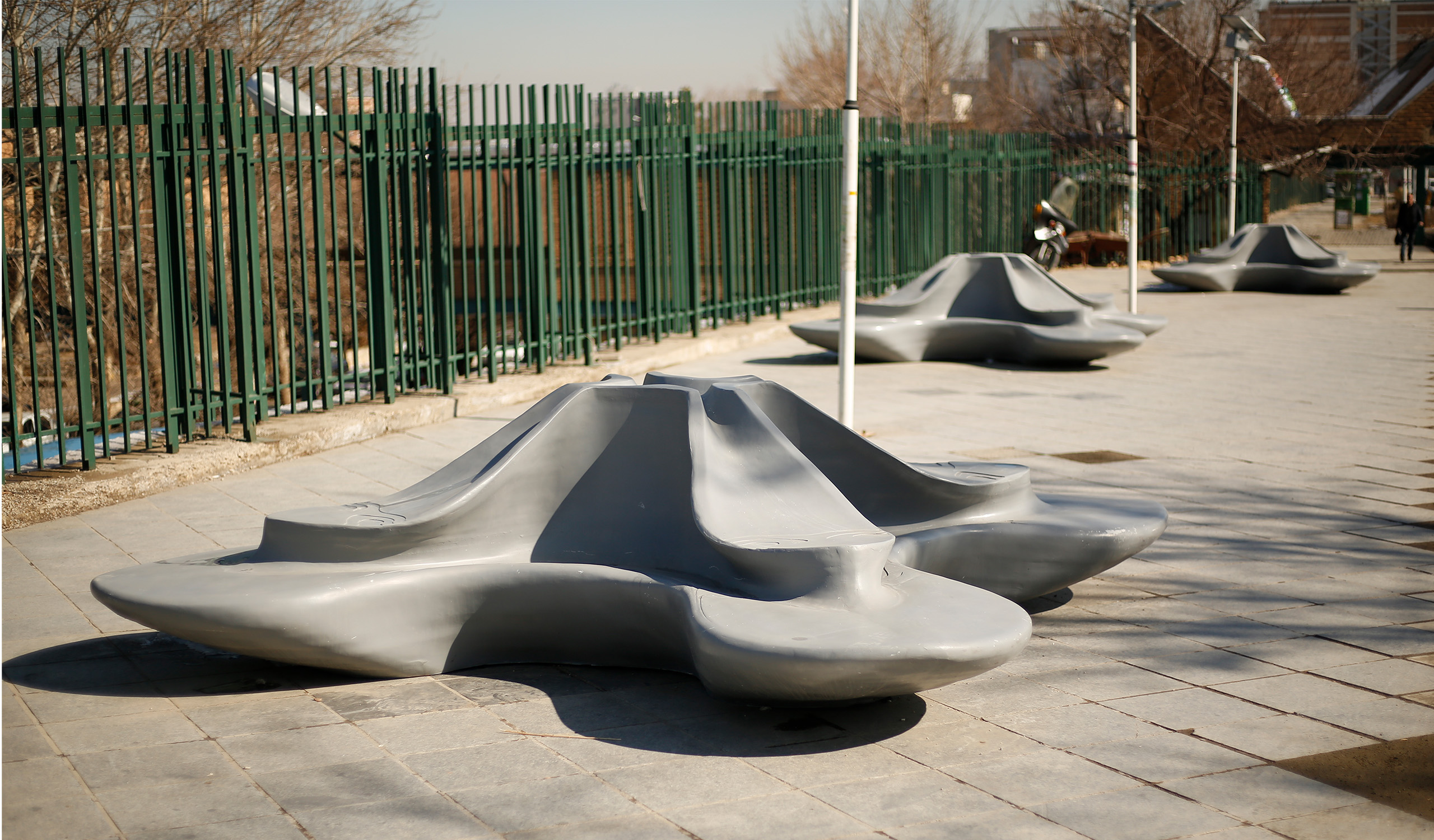
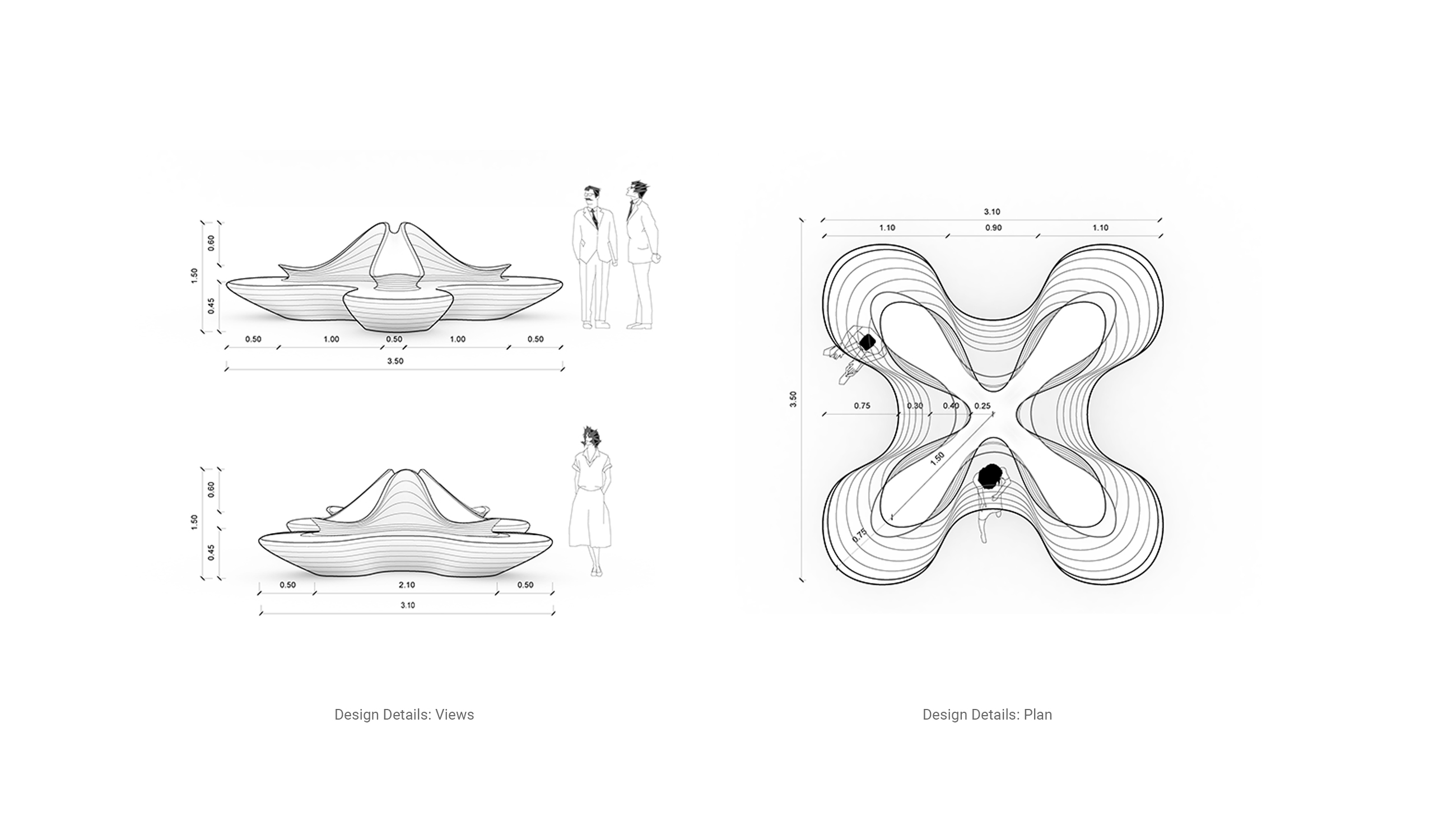
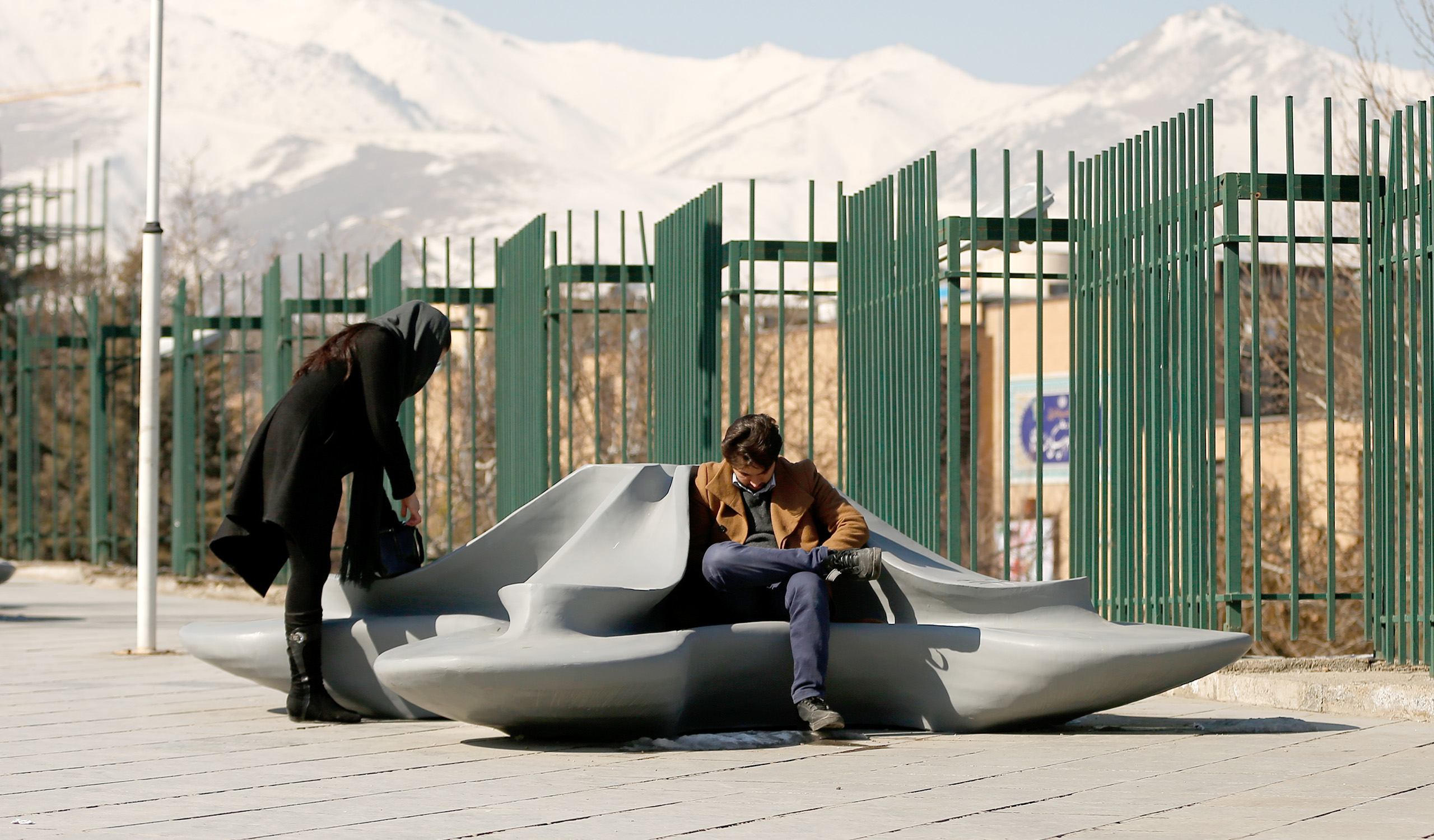
In the context of this design, the Chalipa grid pattern was used as a 3-dimensional generative framework for an interactive urban microspace. The grid is used to generate vertically stacked iterations of a simple cross, which are then morphed together using an alternating morphing system. This doubly iterative system produces numerous archetypes that are responsive to different locations, demographies, functional scenarios, and activities while maintaining a formal unity that is both dynamic and culturally relatable. Functionally, each iteration allows for a variety of seating scenarios and encourages interaction between other users as well as with the unit itself. The initial prototype is digitally fabricated through CNC milling, creating a mold that is used to manufacture the finished product. Each piece weighs 170 kg, can seat up to 12 people, and is made of high-density, non-scratch fiberglass in a variety of colors. The current iteration was commissioned by the city of Hamedan to be placed along the University campus promenade. Chalipa furniture pieces are universally accessible and foster multi-generational interaction, transforming the urban void and becoming a point of community connectivity.